Court Couture
experiment in a braided essay approach that i told myself i'd post a month ago (oops!) in collaboration with Elin Morgan (IG: @elinjart)

‘It was like Mary Poppins […] I don’t know what she was on, but she’s on something.” Said Jamie Murray, commenting on BBC 5 Live Sport. It’s ten o’clock UK time, and roughly nine in the evening in Melbourne as Naomi Osaka takes to the court for the first time at the 2026 Australian Open in a custom Nike kit. Over a month later, and it’s still one of the – if not the - standout moment of the tournament. In turquoise and tie-dye, the actual kit from Nike is completed with a racerback dress design and a matching zip-up embellished with sheer green tendrils trailing from the sleeves, like some sort of sea creature. But it’s the walk-on moment that really takes the breath away. Completing the look, Osaka collaborated with couturier Robert Wun, pairing the Nike dress with a pleated miniskirt and white wide-legged trousers, her face covered by a large, white, wide-brimmed hat and gauzy white veil, holding a large white parasol. And when you look closer, atop the hat is a gorgeous white butterfly, a callback to Osaka’s win in Melbourne in 2021.
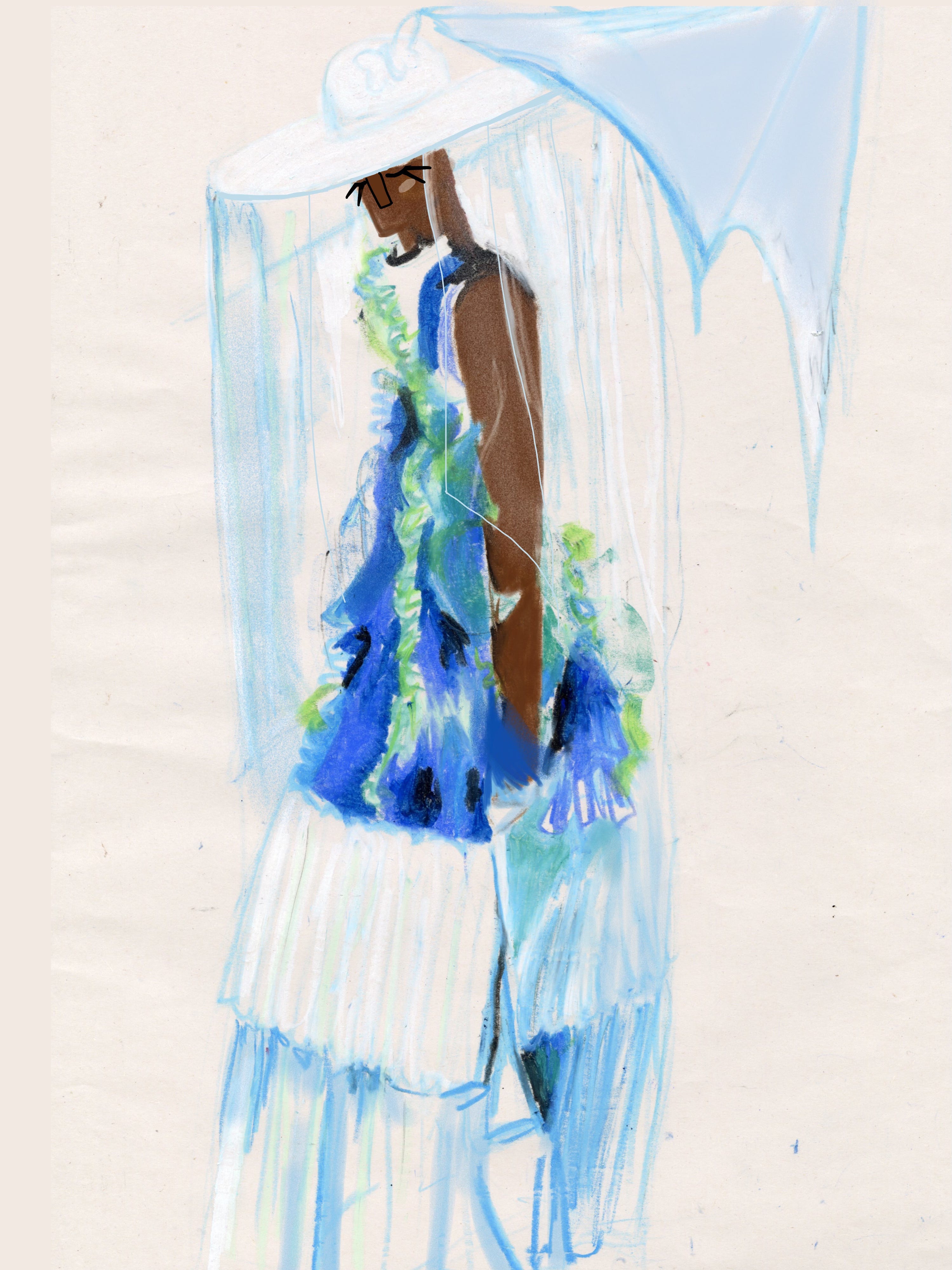
What strikes me most is the silhouette of the piece, in particular pertaining to the collaboration with Wun. The skirt and wide-leg trousers, wide-brim hat and parasol are reminiscent of the fashion worn by women in the 1900s, and which were also worn to play tennis in. Or perhaps Osaka’s skirt was inspired by Lenglen’s own scandalous court couture of the 1920’s.
“I would agree with Jamie that, for me, I felt like there was an element of disrespect towards the sport of tennis not walking onto the court with your racquets and creating such a show in front of your opponent in a first round, requesting a night match…the reason being to show off your outfit,” added Elizabeth West beside Murray. “It kind of looked a bit cheap and a little bit tacky. I don’t think it belonged on a red carpet like a Met Gala, and I don’t think it belonged here.”
I really don’t care how shallow it might sound, I love fashion. My mum loved magazines, and there are a few pieces she bought out of their pages that she passed on to me as I’ve grown up. But she got rid of all the magazines when I was born, placing a desire for an environment with as little exposure to the obscene body standards of the 2000s fashion industry and the ‘heroin chic’ look that had preceded it over her collection of Vogue, ELLE, and ID; feminism over commercialisation. Though I have fond memories of sitting on the sofa with her, America’s Next Top Model on the television, so perhaps I wasn’t as sheltered from the fashion industry as I thought.
Despite her efforts, though, I have the exact same affection for fashion and magazines as my mother does. No amount of classes throughout high school or essays on the horrors of the modelling industry and the beauty and weight standards for women, have detered my love for a physical magazine. I feel like a horrible feminist each time I stand at the self-check-out of a Tesco Express, Vogue or Cosmopolitan in hand, but it’s a guilty pleasure that I won’t quit. I love the feel of the pages, tangible and luxurious, and I tell myself that in a world that’s becoming increasingly online, buying physical media and journalism is important to try to relieve me of anti-feminist sins. Plus, the free sample cosmetics are totally worth it.
One figure in particular continuously finds her way into the pages of a Vogue: Naomi Osaka.
The tennis season boasts four grand slam events, and each time one rolls around, my very first thought is: I wonder what Naomi Osaka will wear this time?
She’s carved out a place in sport and fashion history, notably in both simultaneously, and etched her name beside icons such as Venus and Serena Williams, Andre Agassi, Maria Sharapova and Susanne Lenglen for her bold and inspired court couture looks.
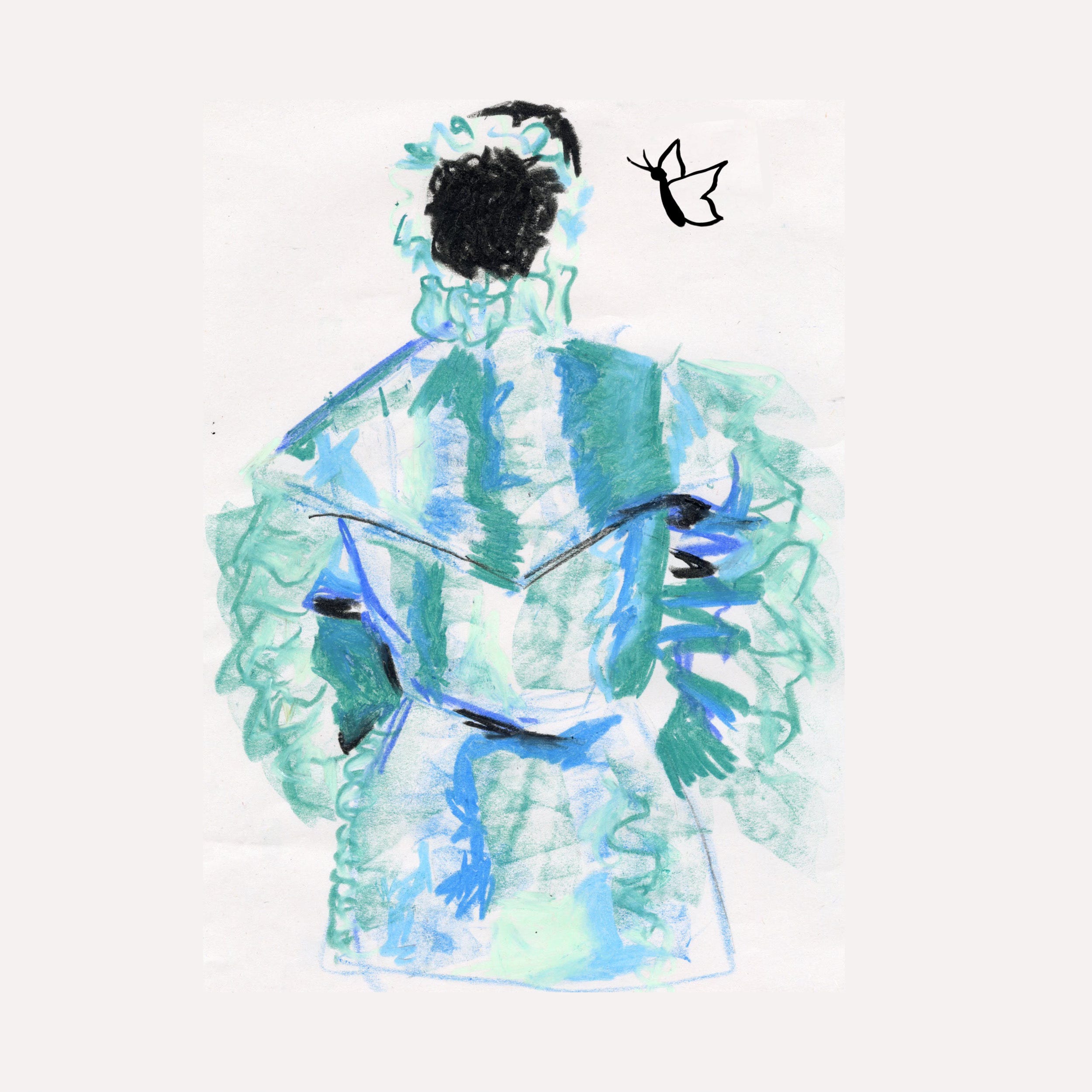
Each of her kits in 2025 brought something new. She started the year with sunflowers adorning her hair in Melbourne; at Roland-Garros she debuted a Sakura cherry-blossom pink kit (that deserved to see more than the one match) whilst Wimbledon she kept traditional in a business-like simple white tennis dress. The crowning achievement of her ’25 Grand Slam closet was indisputably the fourth and final of the year, in a bejewelled rose-themed kit, alternating red and purple bedazzled tops and bubble-hem skirts, with matching blinged-out headphones each time she stepped onto the court, all the way to the semi-finals.
I am fascinated by the collision of sport and fashion, but it’s something I often try to temper when I’m talking about sport. It seems so girly. And women are ostracised enough in sports, it feels shameful to admit I care more sometimes about the attention to detail on the newest football kit than I do about statistics or winning. That same feeling of guilt rises in my chest when flicking through the pages of the latest Cosmo. It’s something frivolous, too feminine and anti-feminist to fixate on things like fashion in such a male sphere, like I’m helping contribute to the bad rep already surrounding women and sport, living in fear of that dreaded demand to ‘explain the offside rule’. The need to prove I care about something more substantial than Nike versus Adidas, and the colour of a jersey. To focus on the sport itself because that has substance.
But like the glossy pages of a magazine, I don’t seem to be able to help myself. I root for the player with the kit I like best. I think vintage football jerseys are far more appealing than those of the current day. I’m a big believer in away kits, whilst fun in most sports, being unnecessary in the NHL, because the clash of colours on the ice is so much more effective and generates fantastic photos like this in a way the white away jerseys could never.
It feels entirely vain and shallow, purely aesthetically minded in comparison, when I think about what sports have traditionally been about. Fair play, teamwork and sportsmanship. Sport is one of the very last few truly human occasions. But behind all the team loyalties and debates about who’s better than who, at their core, I’m reminded that sports are also about entertainment.
It’s an ongoing motif, and one I find endlessly entertaining. What once seemed like two separate worlds - apart from the very rare occasions of David Beckham and the Williams sisters, etc. - have been growing steadily intertwined over the last few years, combining cultures, style and athleticism. The NBA and WNBA provided the origins of the tunnel ‘fit in 2005, becoming a beloved feature of both sport and fashion audiences that has now branched out into the NFL and European football. Athletes outside of their team are now accuring their own individual fashion house sponsors too, like footballers Son Heung-min for Burberry or Jude Bellingham and Louis Vuitton, whilst designers like Stella McCartney and Yohji Yamamoto inspired retro jerseys. Then there’s Osaka, who curates and designs each of her own kits to create the looks that steal the headlines, win or lose.
It’s a lucrative business plan for fashion brands and sponsors, yes, with the wide audience that sports captures, offering exposure to a wider and more diverse market of customers than just those already interested in high fashion. It also, I feel, captures a market of women who have often been excluded from sport; if an interest in fashion gets them interested, then who should be against it?
It isn’t ‘traditional’, as Elizabeth West put it, but it’s cultural. It creates moments, and it’s also just a bit of fun. Sports constantly drill into kids from school age that a game should be about taking part, about the experience, and about having fun above all else. Fashion is simply another layer to that. It’s a little self-indulgent, perhaps, but it’s human creativity in an era threatened by AI that starts a conversation and entertains. And that’s what athletes are at the end of the day: entertainers.
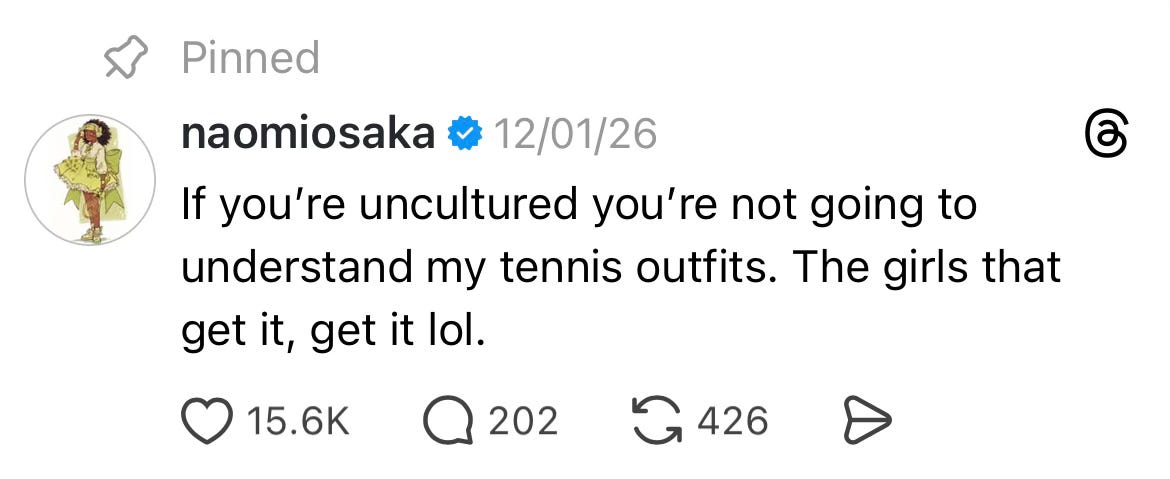
Osaka vowed that 2026 will be no different, and to continue treating every Grand Slam like her own personal Met Gala, unfazed by the outcry that demanded she simply focus on the game. Her AO jellyfish-inspired look seems to be just the start. On threads after the match, she wrote: ‘There’s a demographic that’s been talking about “traditional” tennis outfits and calling me classless for what I wear. To be honest I see it for what it is. I don’t do this for them though, they will never get it and I don’t want them to. I do this for the people who are like me.’
I hope she never stops trying to meld her worlds of sport and fashion, that she never folds to the roar of so-called traditionalists, that she continues to bring couture to the tennis courts. If for no other reason than she is an entertainer, and wondering what she'll come up with next is all a part of the fun of the game.